










Oat Milk vs Almond Milk: A Formulator’s Comparison
October 9, 2024

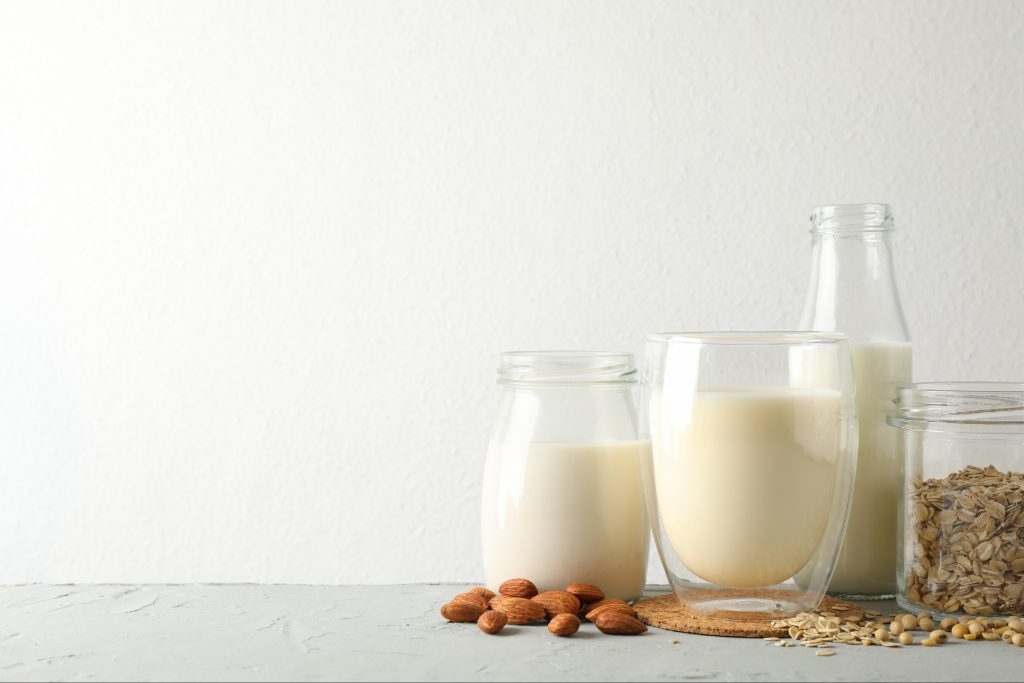
Almond milk and oat milk have become the two default plant-based bases on foodservice menus and in CPG development, and most product teams end up weighing one against the other. The honest answer is that neither is simply the better choice; they are different ingredients suited to different products.
Almond milk is the lighter base, with fewer calories and carbohydrates, while oat milk brings a creamier body and more carbohydrate and fiber. Which one belongs in your formula depends on what you are making, the claims you want it to carry, and how reliably you can source it at scale.
Almond Milk vs Oat Milk Nutrition and Calories
Here is the per-100g picture from USDA data, using unsweetened reference products:
|
Nutrient |
Almond Milk (per 100g) | Oat Milk (per 100g) |
|---|---|---|
| Water | 96.5 g |
90.6 g |
|
Energy |
19 kcal | 48 kcal |
|
Protein |
0.66 g |
0.8 g |
| Total Fat | 1.56 g |
2.75 g |
|
Carbohydrates |
0.67 g | 5.1 g |
| Calcium | 158 mg |
148 mg |
|
Potassium |
49 mg |
148 mg |
|
Vitamin D |
1.59 µg |
1.7 µg |
| Vitamin A | 61 µg |
85 µg |
Source: USDA FoodData Central, almond milk and oat milk (unsweetened reference products).
The two profiles diverge most on energy and carbohydrate. Almond milk is the lighter of the pair, with under 20 calories per 100 grams and very little carbohydrate or sugar, alongside small amounts of fat and protein. Oat milk runs roughly two and a half times the calories, with more carbohydrate and the fiber that comes with it, plus slightly more protein. Both are usually fortified to similar levels of calcium and vitamin D, so on the raw numbers the choice is really between almond’s lightness and oat’s body.
Taste and Texture for Different Applications
Flavor and body are where the two feel most different in a finished product. Almond milk is light and faintly nutty, tasting mostly of the almond itself, which lets it blend into smoothies, protein shakes, dairy-free frozen desserts, sauces, and creamers without competing with the other ingredients, so it is the base to reach for when you want it in the background. Oat milk sits at the other end, richer and sweeter, with a fuller body that lends structure to baked goods and depth to cream-based sauces. The extra weight is an asset in some formats and a drawback in lighter ones, which is why many product lines keep both on hand and match the base to the job.
Health Benefits and the Claims They Support
For a formulator, the health story matters most as the claims it lets you put on a label, and the two bases back different ones.
Almond milk: Low in carbohydrates and sugars, it suits keto, low-sugar, and blood-sugar-conscious positioning, since unsweetened almond milk has a low glycemic index. It carries vitamin E for an antioxidant angle and is usually fortified with calcium and vitamin D for bone-health claims. It is free of gluten on its own, though as a tree nut it has to be declared as an allergen.
Oat milk: Higher in fiber, including beta-glucan, which carries an FDA-authorized heart-health claim tied to cholesterol and makes a strong on-pack story. The trade-off is sugar: oat’s maltose gives it a higher glycemic index, so it fits less cleanly with blood-sugar or low-sugar claims. Oat is nut-free and dairy-free, but a gluten-free claim needs certified gluten-free oats, since standard oats pick up gluten in handling.
One note on either base: the nutrition picture shifts with sweetened and flavored versions, so an unsweetened spec is the cleanest foundation for a low-sugar or no-added-sugar claim.
How Each Milk Is Made, and What Gets Added
Both milks start simple, then pick up ingredients depending on what the finished product has to do. The additions are where a clean label is won or lost, so a supplier’s deck is worth a close read.
Almond milk: It is made by milling almonds with water and straining out the solids. Because the base is light, most retail versions add a gum such as gellan or locust bean for body, a little lecithin to emulsify, and salt with a calcium and vitamin blend. Barista almond blends usually add oil as well, to build froth.
Oat milk: It is made by milling oats with water, using enzymes that break the starch into simple sugars like maltose, then straining. A standard oat milk carries gellan gum, salt, and a calcium and vitamin blend. Barista oat blends add oil for richness and an acidity regulator such as dipotassium phosphate, so the milk does not curdle in hot espresso.
The longest decks tend to be the barista blends, of either base, because oil and stabilizers are the usual price of steaming and holding foam. Clean label comes down to how short and recognizable the finished list is, and a shorter list is easier to put on a carton shoppers will read. For a coffee program, the real question is whether an almond milk can reach barista performance without the added oils.
Read: How Is Almond Milk Made
Barista-Grade Almond Milk
Coffee is where most foodservice buyers make their call, and it has long been almond milk’s hardest test. In a hot, acidic shot, conventional almond milk could split or curdle, and any foam tended to be thin and short-lived, collapsing before a barista finished the pour.
Almond Milk 2.0 was engineered to solve it:
- Microfoam that lasts: dense and silky, holding 45 minutes or more
- A stable canvas for latte art: it holds the pour instead of collapsing
- Thick, creamy body: no watery finish, hot or cold
- 3 grams of protein per serving, with no added oils
It earned recognition from the people who judge coffee for a living. At the 2025 Specialty Coffee Expo, the industry’s flagship event, the Specialty Coffee Association named Almond Milk 2.0 its Best New Product in the non-coffee beverage category. For a beverage developer or hospitality buyer, the takeaway is simple: almond milk can hold its own at the espresso bar now, without giving up the lighter calorie and carbohydrate profile that sets it apart from oat.
Choosing the Right Base for Your Product
For most plant-based products, almond milk is the more flexible starting point. It is lighter, lower in calories and carbohydrates, easy to keep clean on the label, and, with the right formulation, capable on the espresso bar. Oat milk still has its place when a formula calls for a thicker, sweeter base or a nut-free option. The honest read is that the base should follow the product you are building, and for a growing share of products, almond now covers ground it could not a few years ago.
Partnering on Your Next Plant-Based Product
Strong plant-based products start with a simple decision: pick the base that fits what you are building, then confirm your supplier can deliver it at full volume and not just in a sample batch. As a grower-owned, vertically integrated processor, Harris Woolf Almonds keeps the chain in view from the California orchard to the finished ingredient. The same partner can supply a customizable almond milk base for your own formulation, the finished Almond Milk 2.0 for the coffee bar, and almond paste, almond protein powder, and almond oil for the rest of the line, scaling from a first pallet to a truckload without a change of supplier.
Tell us what you are formulating and we will help you find the right fit, then build from a spec you can hold all the way to the shelf. Reach out to our team and we will take it from there.
Almond Milk vs Oat Milk FAQ
Is oat milk or almond milk healthier?
Neither is healthier across the board; it depends on what the product needs to do. Almond milk is lower in calories and carbohydrates and carries vitamin E, while oat milk offers more fiber, including heart-supportive beta-glucan, at a higher calorie count. Both are usually fortified with calcium and vitamin D, so the finished spec matters more than the category label.
Which has more protein, oat milk or almond milk?
Standard oat milk usually edges out standard almond milk on protein, though both sit below cow’s milk. The gap is not fixed, though. A protein-forward almond formulation can close it; Almond Milk 2.0, for instance, delivers 3 grams of protein per serving.
Is oat milk or almond milk better for coffee?
Oat milk became the café default through barista blends that add oil and stabilizers for stable foam, while conventional almond milk tended to curdle or foam weakly. A purpose-built almond milk changes the comparison, steaming into dense microfoam that holds 45 minutes or more without the added oils.
Which has fewer calories, oat milk or almond milk?
Unsweetened almond milk is the lower-calorie option, often around 30 calories per cup compared with roughly 90 to 120 for oat milk. Sweetened and flavored versions raise both, so the unsweetened version is the fairest basis for a low-calorie claim.
Is almond milk or oat milk gluten-free?
Both are gluten-free by nature, but oat milk needs certified gluten-free oats to carry the claim, since oats commonly pick up gluten during growing and milling. Almond milk has no gluten on its own; just confirm any added ingredients are gluten-free too.
Which is better for a clean label, oat milk or almond milk?
It depends more on the formulation than the base. Barista blends of either milk usually add oils and stabilizers to perform in coffee, while standard versions keep shorter decks. A well-built almond base can reach good body without added oils, which gives a team aiming for a short label a simpler starting point.