










How Barista-Grade Almond Milk Performs in High-Volume Cafés
August 1, 2026

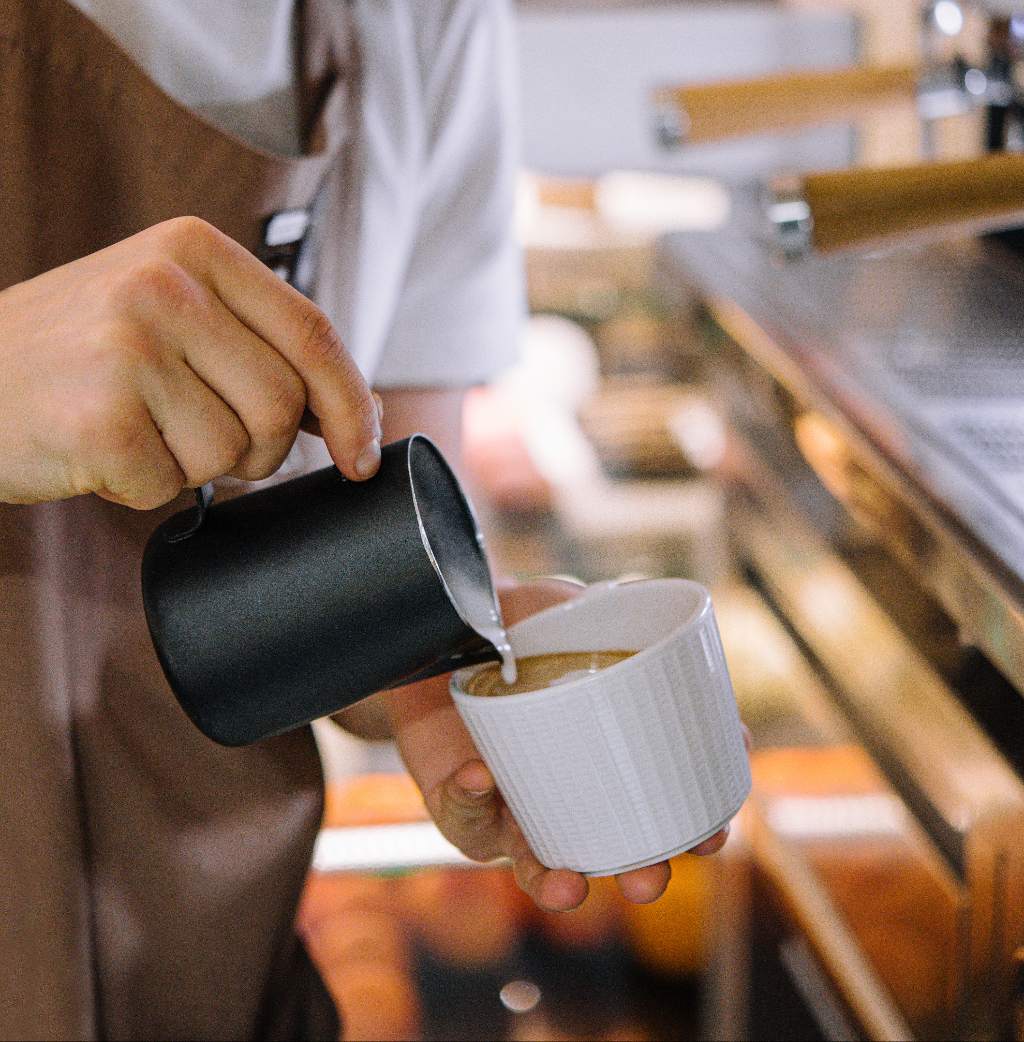
Plant-based orders keep climbing, and almond milk sits near the top of the request list at most coffee bars. It’s also harder to get right than dairy: it has to steam fast, froth into stable microfoam, and hold its texture from the first ticket to the last, all without a barista babysitting it. At Harris Woolf Almonds, we’ve spent 35 years in California almonds, long enough to watch plenty of promising cartons sail through a demo and stumble in a real rush. The difference almost always comes down to testing, formulation, and routine.
How to Pressure-Test a Barista Almond Milk
A single test cup proves very little, yet it’s how most cafés trial a new milk. The real problems only show up under service conditions, so pressure-test a candidate the way a rush will:
- Steam a full pitcher to temperature, not a splash.
- Pour back-to-back drinks to mimic peak pace.
- Check foam structure after the pitcher sits for several minutes.
- Pull a shot and watch for curdling in hot espresso.
- Taste hot and iced, since texture shifts between the two.
Most letdowns trace back to a handful of common failure modes at scale, and a full-pitcher test surfaces them while a remake still costs a few ounces of milk instead of a customer.
What Determines Almond Milk Performance at Volume
Foam is built by proteins that trap air under steam and hold it while the drink travels. When the protein system is thin, the bubbles come out coarse and fade before the latte reaches the table, and no steaming technique can compensate once the tickets stack up. Body works the same way; the balance of fat and suspended solids decides whether a drink reads creamy or watery, and an imbalance you’d never notice in one cup shows up plainly across a full menu.
Heat tolerance is where retail cartons usually give themselves away. Many almond milks hold together cold, then lose structure the moment a wand hits them, which is why repeated steaming across back-to-back pitchers is a better judge than any single pour. Batch-to-batch consistency matters just as much at volume, because a formula that varies from carton to carton forces your baristas to re-learn the milk mid-shift. Flavor, happily, is the simple part: a clean, lightly sweet profile that supports the espresso rather than fighting it.
For a deeper look at the sourcing and formulation behind these factors, read: Choosing Almond Milk for Coffee Shops.
How Almond Milk Works Across a High-Volume Menu
One dependable carton can carry most of a café menu, and the payoff is bigger than it sounds: fewer SKUs means simpler ordering, less cooler shuffle, and one set of steaming habits to train across the team.
Hot espresso drinks. Lattes, cappuccinos, and flat whites expose froth and heat stability fastest, so a milk that steams predictably gives you consistent pours from every barista on the schedule.
Iced and cold foam. A higher-protein almond milk whips and clings in a tall glass instead of thinning out, which keeps cold drinks looking sharp through a long iced season.
Blended and batch. Smoothies, frappes, and batched cold brew lean on body and a clean flavor that holds up under ice and high-speed blending.
How to Keep Almond Milk Consistent During a Rush
Steam almond milk to 140 to 150°F (60 to 65°C), the same range you’d target for dairy. Almond proteins hold their structure in that window, and above 160°F the milk scorches and the foam collapses.
Steamed past 160°F: flavor turns flat, foam goes coarse, and remakes slow the line.
Steamed to spec: glossy microfoam, a sweeter finish, and pours that look the same on ticket one and ticket two hundred.
Temperature is only half of it, though; the other half is routine. A short line check before doors open keeps every barista on the same standard:
- Cartons rotated FIFO, opened ones dated and chilled
- Steam wand purged before the first pitcher
- Target temperature set at 140 to 150°F (60 to 65°C)
- Backup cartons within arm’s reach of the bar
- Pitchers rinsed cold between non-dairy and dairy pours
Where Almond Milk 2.0 Fits in a High-Volume Café
We developed Almond Milk 2.0 as a finished, ready-to-use almond milk for coffee programs, because baristas kept telling us the same thing: most almond milks were made for cereal bowls, not steam wands. Almond Milk 2.0 won a 2025 Best New Product Award for Specialty Non-Coffee Beverage Standalone at the Houston Specialty Coffee Expo, and the specs hold up under rush conditions:
- Microfoam hold. Dense, silky foam that lasts 45 or more minutes, in hot and cold drinks.
- Protein. 3g of protein per 100 mL, enough to support foam structure and body in the cup.
- Clean label. Vegan, dairy-free, gluten-free, no added oils.
- Format. Shelf-stable one-liter aseptic cartons in original flavor, sized for steady rotation through a busy back of house.
Consistency in the carton starts with the supply chain behind it, and ours is unusually short: Harris Woolf Almonds is independent, grower-owned, and vertically integrated, so one operation controls quality from the California orchard to the finished carton. We’re SQF Certified, and cafés that pursue a long-term supply partnership with us keep one dependable source as counts climb from sample cases to truckload.
Pour Better With Harris Woolf Almonds
Almond milk earns its place on a high-volume bar when it performs the same on every ticket, and the cup comes down to how the milk is sourced and formulated. Almond Milk 2.0 was built to deliver that consistency where it counts most.
At Harris Woolf Almonds, we work with cafés and roasters who want plant-based milk that holds up through a rush, not just a tasting. Our grower-owned supply and finished almond milk are built around dependable performance, from first sample to full scale.
Partner with Harris Woolf Almonds to put a barista-grade almond milk on your bar. Request a sample or bulk order today.