










The Best Milk for Latte Art Is Not What Barista’s Would Expect
July 14, 2026

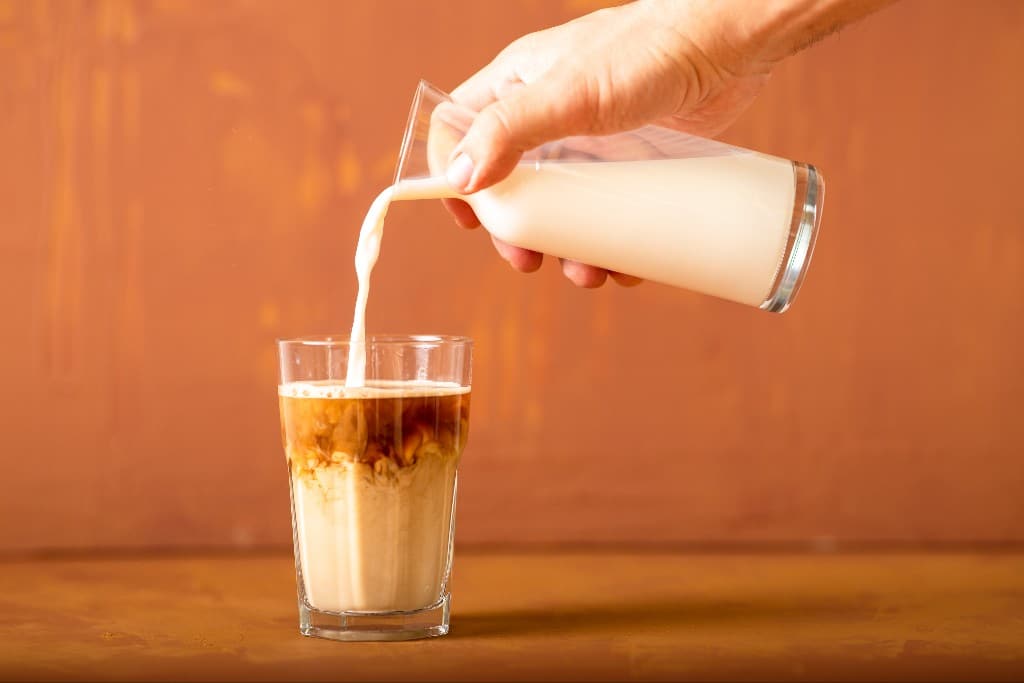
Ask a barista which plant milk pours the cleanest rosetta and almond milk is rarely the first answer. It has a reputation for thin foam, a watery finish, and a tendency to curdle the moment it meets hot espresso, which is why many bars treat it as the alt-milk that can’t hold a pour. The reputation is earned, but it points at the wrong cause.
The best milk for latte art turns out to be a question of how the milk is formulated rather than which plant it comes from, and the same gaps in protein and stability behind why most barista almond milks fail are exactly the gaps a coffee-first almond milk is built to close.
Why Almond Milk Got Its Bad Latte-Art Reputation
The reputation comes from real failures at the bar. Most almond milk on the market was formulated for cereal bowls and smoothies, where a light, refreshing profile is the goal and steam never enters the picture. Stretched in a pitcher, that same milk throws large, loose bubbles that drain fast, and against a hot, acidic shot it can split into visible flecks. A non-dairy frothing comparison shows why a base built for drinking cold behaves so differently once heat and pressure arrive.
The cause, though, is the recipe rather than the nut. Almond paste carries the protein and fat that, balanced correctly, build the foam structure and body a latte needs. Retail almond milk underperforms because it is diluted for a glass, with low solids and minimal stabilization, since cold milk never faces steam or acid. Change the formulation target from the cereal bowl to the espresso bar and the result changes with it, which is the shift the category’s reputation hasn’t caught up to.
What Makes the Best Milk for Latte Art
Latte art is a stress test, and a handful of measurable properties decide whether any milk passes:
- Protein for foam structure. Protein builds the walls of each microfoam bubble, so a base with enough of it steams into fine, tight foam that flows like wet paint instead of breaking apart on the pour.
- Fat and total solids for body. Together they decide whether a latte coats the palate or reads as watery behind the espresso.
- Stability against heat and acid. A stabilizer system keeps proteins in suspension through steaming and contact with a strong shot, so the milk integrates instead of curdling.
- Foam that holds through service. Microfoam has to stay intact long enough for the pour to set and stay legible by the time the drink reaches the table.
Technique carries part of the load, but no amount of skill rescues a base that lacks the protein and stability to hold structure. The best milk for latte art is the one that makes a clean pour repeatable across a whole team, not a lucky result on a slow morning.
READ: How To Froth Almond Milk
How Almond Milk 2.0 Overturns the Expectation
Most almond milks are built for the cereal bowl, then asked to keep up at the espresso bar. Almond Milk 2.0 was developed the other way around, engineered for the bar from the start rather than adapted from a retail carton, and the difference shows the moment it meets the steam wand:
- Microfoam with staying power. It steams into dense, silky foam stable for 45 minutes or longer, giving baristas a reliable canvas for clean pours instead of foam collapsing after the first cup.
- Body without the watery finish. At 3g of protein, it pours a thick, creamy texture and stays smooth against hot, strong espresso rather than curdling.
- A flavor built for espresso. It’s balanced to support the shot rather than cover it, so the coffee stays forward in the cup.
- Made for a working bar. The recipe is clean-label-friendly with no added oils, plus vegan, gluten-free, dairy-free, and non-GMO, in shelf-stable aseptic cartons fitting existing storage and par routines.
The same qualities make it work as an almond milk for lattes, and they carry just as well into cold drinks and ready-to-drink concepts, so it can support a full menu rather than a single drink.
Consistency Comes From the Supplier, Not the Formula
A milk that performs once is a demo; a milk that performs every week is a supply chain. Harris Woolf Almonds is grower-owned and vertically integrated, controlling the chain from California orchards through processing, which is what holds the spec steady from one order to the next and from a first sample to truckload volume. The operation is SQF Certified and USDA Organic, and Almond Milk 2.0 won a 2025 Best New Product Award for Specialty Non-Coffee Beverage Standalone at the Houston Specialty Coffee Expo, a sign the results hold up under expert evaluation rather than internal testing alone.
Build Your Coffee Menu With Harris Woolf Almonds
The best milk for latte art supports a better finished drink through foam, body, and consistency from the first pour through service, and Almond Milk 2.0 was developed with those needs in mind for coffee applications and other premium beverage concepts. At Harris Woolf Almonds, we bring that same focus to a broader range of ingredient solutions, including almond protein powder, nut butters, and other almond ingredients designed to support product innovation with purity, customization, and dependable supply at the center.
Partner with Harris Woolf Almonds to bring your ingredient vision to life. Request a sample today!
Frequently Asked Questions
What is the best milk for latte art?
The best milk for latte art has enough protein for fine, stable microfoam, enough fat and solids for body, and the stability to resist curdling in hot espresso. Dairy sets the benchmark, and a coffee-engineered plant milk like Almond Milk 2.0 can meet it by hitting the same performance targets.
Can almond milk really hold latte art?
A standard almond milk usually can’t, because it lacks the protein and stability to keep dense foam intact. An almond milk formulated for coffee can produce microfoam that holds for 45 minutes or more and supports clean, repeatable pours.
Does Almond Milk 2.0 work for both hot and cold drinks?
Yes. It is built to steam into stable microfoam for hot lattes and to hold texture in cold drinks, and the 2026 barista palate study reported strong creaminess and foam performance across both.
Can cafés try Almond Milk 2.0 before switching?
Yes. It is available to sample or order, so a bar can pull real shots and judge the foam, body, and pour in its own drinks before committing. Harris Woolf Almonds can also scale supply from a first sample to truckload volume as a program grows.