What You’ll Find
What Makes a Non-Dairy Milk Good for Latte Art
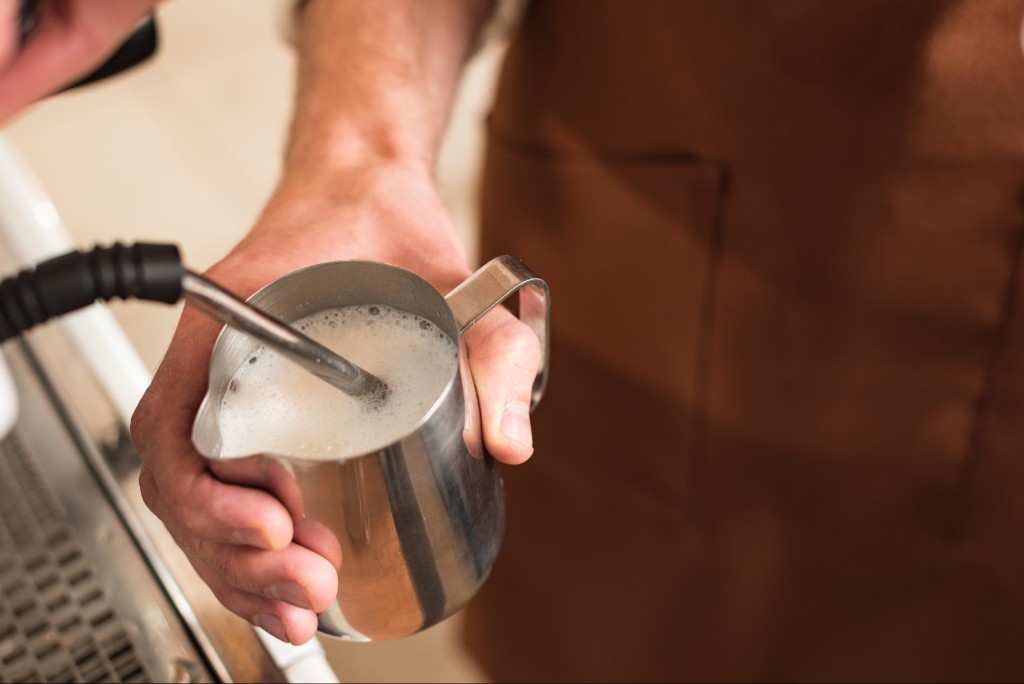
Latte art depends on microfoam that pours like wet paint and then stops moving once it lands on the crema. A Food Hydrocolloids study describes the balance in rheological terms, where the foam has to flow smoothly out of the pitcher yet resist displacement in the cup. Foam that stays too fluid lets the pattern dissolve as more milk is added, and foam that stiffens too early refuses to pour at all. A non-dairy milk earns its place on the bar by landing between those two states consistently, drink after drink, while the espresso still tastes like espresso.
In practice, the qualities that matter most include:
- Fine Microfoam: Latte art looks its best on a surface that appears smooth, glossy, and tightly textured. Small, even bubbles create a cleaner background for hearts, rosettas, and other patterns to stand out.
- Stable Texture: The milk should stay velvety as it moves from steaming to pouring. Foam that separates into stiff froth on top and thin liquid underneath can’t carry a pattern.
- Good Pour Control: Some milks feel easier to guide than others, especially when working through the crema. A steady, responsive flow gives baristas more freedom to place shapes with accuracy.
- Balanced Flavor: A pleasant latte still needs to taste like coffee. The milk should bring softness and body while allowing the espresso to stay present in the overall profile.
- Strong In-Cup Performance: The pattern should still be defined when the drink reaches the guest, rather than blurring or sinking into the crema a minute after the pour.
What to Look for in the Best Non-Dairy Milk for Latte Art
Only some of those qualities show up in a single test pour. The rest surface over a week of service, which is why the criteria a coffee program should weigh mix what a sample shows on the wand with what a supplier has to prove over a season.
Heat Stability
Steaming should produce the same texture from the first drink of the morning to the last, without the milk thinning out, splitting, or picking up a cooked flavor near the top of its temperature range. Plant proteins can clump when they meet the combined heat and acidity of espresso, and lighter roasts with brighter acidity raise the risk. Overheated milk poured into a bright espresso is the most common reason almond milk curdles in coffee, along with milks that lack a stabilizing system. A milk that stays cohesive at 55 to 60°C (130 to 140°F), the range most barista guidance sets for plant milks, gives baristas a wider margin for error during a rush.
Iced lattes and cold foam test a different property. An International Journal of Gastronomy and Food Science study found that at 4°C, cow’s milk foamed better than the plant-based barista beverages tested, which puts more weight on formulation when a menu includes cold foam.
Read: How to Froth Almond Milk
Flavor in Espresso Drinks
Heat changes flavor as well as texture, and a milk that tastes pleasant on its own can still clash with espresso once steamed. Testing in actual espresso beverages gives a clearer sense of how the milk supports the drink as a whole, and light roasts with bright acidity are the harder test.
Ingredient Deck and Label Direction
Flavor also traces back to the label. A short ingredient list without added oils, along with clear allergen information, answers the questions guests ask at the register and keeps menu listings consistent across locations.
Batch Consistency
Even a well-built formula only helps if every case matches the last. A milk that steams one way from one delivery and differently from the next forces baristas to relearn it each time, while consistent batches keep drink quality even across shifts and let multi-location programs train staff once.
Operational Fit
Consistency extends past the pitcher to the storeroom. Shelf-stable aseptic cartons store at room temperature until opened, which frees walk-in space, and a pack size that matches bar usage keeps opened product from expiring before it’s poured. Supply matters too, since a milk that goes on backorder forces a menu change mid-season.
Commercial Value
Each of those criteria eventually shows up in the cost per drink, which is why price per carton tells only part of the story. Cost per drink also includes foam that gets dumped when it won’t pour, drinks remade after curdling, and barista time spent working around an inconsistent milk. Latte art carries its own value as well. A Deakin University review of barista-quality plant milks cites research showing that attractive latte art raises guests’ taste ratings and perceived value, which makes them more willing to pay premium prices.
Almond, Oat, Soy, Pea, and Coconut Milk Compared for Latte Art
Measured against those criteria, the common plant milks sort themselves fairly quickly, though dairy remains the benchmark for all of them. Casein and whey proteins stabilize air bubbles fast, and milk fat gives dairy foam its body. The Deakin University review puts most plant-based milks at 0.5 to 2.9 g of protein per 100 mL, compared with about 3.3 g in cow’s milk, which is why most non-dairy milks rely on formulation to produce comparable foam. The review also names oat milk a leading choice among baristas and consumers for coffee.
Each plant milk tends to be chosen for a different strength. Almond is picked for a cleaner flavor that keeps the espresso clear while still supporting a smooth finish, oat for body and a familiar café feel, and soy and pea for the foam volume their protein builds. Foam volume is a separate question from latte art, and the best non-dairy milk for frothing cappuccinos and cold foam, where a taller, stiffer head is the goal, is not always the one that pours the cleanest rosetta. Latte art asks for a finer, more fluid microfoam, and the table scores each milk on that narrower job.
| Milk |
Latte Art Performance |
Flavor With Espresso |
Watch For |
| Almond |
Barista formulas pour clean patterns. Standard formulas produce thin foam that fades fast. |
Light and clean, keeps espresso forward |
Low protein in standard formulas. Tree-nut allergen. |
| Oat |
Creamy, dense microfoam. The most widely used barista option. |
Mild and slightly sweet |
Heavier lines in small drinks. Gluten-free only when certified. |
| Soy |
Stable foam supported by high protein |
Beany notes can compete with light roasts |
Curdles readily in hot, acidic espresso |
| Pea |
Stable foam supported by high protein |
Neutral to slightly earthy |
Flavor can turn cooked if overheated |
| Coconut |
Glossy but often bubbly, since high fat destabilizes foam |
Pronounced coconut flavor |
Foam fades quickly. Performs best in blends. |
The Watch For column also shapes which patterns a bar leans on. Heavier foams draw thicker lines that suit tulips and stacked hearts, while lighter, more fluid foams hold the finer detail of a rosetta, and a shop that pours one signature design on every drink will want a milk whose foam matches it.
Read: Oat Milk vs Almond Milk for Coffee
Formulation Choices That Decide Latte Art Performance
Protein, fat, viscosity, and stabilizers decide whether a plant-based milk stretches into microfoam or collapses into bubbles, and the same base ingredient can go either way depending on how those four are set. A formulation built for coffee service is designed around:
- Protein Support: Protein coats air bubbles as they form and keeps them from merging. Higher, well-dispersed protein produces finer microfoam that lasts longer in the cup.
- Fat Balance: The level and type of fat influence richness, body, and the overall feel of the drink. A balanced profile brings a creamier impression without covering the espresso, while very high fat, as in coconut milk, can break foam down.
- Viscosity Control: Body slows the liquid draining out of the foam. The Food Hydrocolloids study traced the dry, stiff texture of plant-based foam mainly to fast liquid drainage and found that higher bulk viscosity slowed both drainage and bubble coarsening.
- Stabilizing Systems: Emulsifiers and hydrocolloids such as gellan keep fat and protein evenly suspended and help the milk tolerate heat and coffee acidity without splitting.
- Particle Size: Homogenization breaks fat and solids into smaller, more uniform particles, which improves emulsion stability and foam quality.
Formulation choices like these explain why two almond milks, or two oat milks, can behave completely differently on the same steam wand. A barista label alone doesn’t guarantee performance, which is the core issue behind why most barista almond milks fail in real service. It also explains why an almond milk built with those choices in mind can hold its own against any option on the bar.
Why Almond Milk Stands Out in Coffee Shop Applications
Almond milk earns its place on a coffee menu with a lighter, cleaner flavor that lets the espresso lead, a texture that stays smooth rather than heavy in small drinks, and a dairy-free, shelf-stable profile that fits most programs. Standard almond milk has historically fallen short on foam, and a purpose-built formulation closes that gap.
Almond Milk 2.0 is a creamy, frothy, dairy-like almond milk from Harris Woolf Almonds, developed for cafés, hotels, and restaurants that need strong barista-style performance, smooth texture, and reliable results in lattes, cappuccinos, and other coffee applications.
Almond Milk 2.0 steams into dense, silky microfoam that holds for 45 minutes or more, giving baristas a stable canvas for latte art in hot drinks and a thick, creamy body in cold ones. It contains 3g of protein per 100 mL, is vegan, dairy-free, gluten-free, and non-GMO, and is made without added oils. It comes in original flavor in one-liter aseptic cartons.
Almond Milk 2.0 won a 2025 Best New Product Award for Specialty Non-Coffee Beverage Standalone at the Houston Specialty Coffee Expo.
Pour Better With Harris Woolf Almonds
A milk that meets every criterion on paper still has to earn its spot at the bar, and the fastest proof is a few days of live service. Steamed on the house machine and poured into the drinks on the menu, hot and iced, it shows how long its foam holds a pattern, how it tastes with the house roast, and whether it fits the workflow of a busy shift.
Harris Woolf Almonds is a grower-owned, vertically integrated processor of California almonds with 35 years of partnerships between its founding family farms, growers, and food and beverage brands. Our almond ingredients for beverage applications include Almond Milk 2.0, available from sample volumes to truckload orders so that a single café and a multi-location program can standardize on the same milk.
Partner with Harris Woolf Almonds to pour better plant-based lattes. Request a sample today.
Frequently Asked Questions
Can You Make Latte Art With Almond Milk?
Yes, with a barista-formulated almond milk. Standard almond milk is low in protein and tends to produce thin foam that collapses before a pattern sets, while barista formulas add protein, emulsifiers, and stabilizers that let the milk stretch into microfoam that holds a pour.
What Is the Best Non-Dairy Milk for Frothing?
Frothing and latte art reward slightly different things. Higher-protein milks like soy and pea build the most foam volume for frothed drinks, while latte art needs finer, more fluid microfoam that barista almond and oat formulas deliver well. The best non-dairy milk for frothing comparison breaks down each option by protein, fat, and foam stability.
What Temperature Should Non-Dairy Milk Be Steamed To?
Most barista guidance puts non-dairy milks at 55°C to 60°C (130°F to 140°F), a few degrees cooler than dairy. Past that range, plant proteins break down faster, which thins the foam and raises the risk of curdling in espresso.
Why Does Non-Dairy Milk Curdle in Coffee?
Plant proteins clump when they meet the combined heat and acidity of espresso. Overheated milk, very acidic light roasts, and milks without a stabilizing system are the usual causes. Barista formulations are built to stay smooth in coffee, and adding milk to espresso gradually rather than all at once also helps.
Which Non-Dairy Milk Tastes the Most Like Milk?
Soy milk is closest to cow’s milk in protein content and body. Oat milk is widely described as the most neutral and naturally sweet in coffee, while almond milk has a lighter body and a clean, lightly nutty flavor that keeps espresso forward.
When Is Almond Milk Not the Right Fit for Latte Art?
Almond milk is a tree-nut product that requires allergen disclosure on menus, and cafés that serve guests with nut allergies usually keep a nut-free option such as oat alongside it. Programs built around small, dense drinks like cortados and flat whites may prefer oat milk’s heavier body, since almond keeps a lighter mouthfeel even in barista formulations. Cold-only or drive-thru programs that rarely pour art can rank foam performance lower and choose on flavor, cost, and shelf life. Many cafés run two plant-based options for these reasons.